The Anarch Revolt
The Anarch Revolt began in the middle ages, as the cruel oppression of the young by their elders reached it peak and the world of the damned was destabilized by the Inquisition and the Black Death. As vampires and humans both died across Europe and the Middle East, the young saw their chance to overthrow the ancients. In a number of locations, childer rose up and attacked their elders, killing several and causing others to flee. It is then when the Children of Osiris saw their opportunity, and performed the Great Ritual. This powerful act of sorcery was performed by some of the most ancient members of the Clan, some say that they had to give their unlives to enact the rite. The effect of the Great Ritual was that vampires who were particularly humane or who were cruelly treated by their masters suddenly found their blood bonds broken. This caused huge numbers of enslaved vampires across Europe to be freed from blood bonds and to be able to rise against their former masters. Perhaps because of the horrible treatment they had been subjected to or some quirk of psychology or metaphysics, every Gargoyle became free of the blood bond.
Eventually, the flames of rebellion died as the elders began to gain an upper hand. Many of the rebels would eventually bend the knee to their elders and a number of the Clans would join together under the rule of their eldest members to form the Camarilla. The Clans who would form the Camarilla were the Baali, Lhiaanan, Samedi, Lamia, Salubri, Sybarites, and the Kiasyd. The Camarilla would based on adherence to the six Traditions, first among them the Masquerade - keeping the existence of vampires secret from mortals. The Camarilla also maintained a ruthless attitude towards mortals, regarding them as chattel to be manipulated and used for the survival, pleasure, or convenience of vampires. Likewise, the vampires of the Camarilla viewed human sentimentality and compassion as a weakness to be thrown off with mortality. They generally believe in embracing their vampiric natures and the inherent evil within themselves.
The Sabbat
The Sabbat
The anarchs who refused to bow to the elders would eventually come to be known as the Sabbat, so named because of the Saturday upon which the Great Ritual was performed is considered a sacred day among many in the sect. Under the leadership of the Children of Osiris, the Sabbat would grow into a powerful sect in its own right, with it's own laws, traditions, and values. While it does not have the power that the Camarilla holds, the Sabbat does control major cities in the Americas along with the majority of Egypt, the center of power for the Children of Osiris.
The Sabbat believes in freedom from the rule of the elders, they particularly fear and hate the Antediluvians who they see as monsters. They also believe that it is vital for vampires to retain their humanity and to strive to respect the freedoms of mortals as they themselves wish to have freedom from their elders. For this reason, the use of ghouls is frowned upon by the Sabbat, which leads them to generally having less power in the mortal world. Some Sabbat vampires do, of course, have ghouls or use their powers to make slaves of mortals. Exploiting mortals in such a way is frowned upon and causes much status to be lost by vampires who do it, especially if they are cruel to their servants or throw their lives away frivolously. In some cases, vampires have even been punished, expelled from the Sabbat, or even killed for extreme cruelty towards humans. As many of the young vampires of the Sabbat's early days age and become elders themselves, they become more jaded and calloused about the value of human life and become more willing to use harsh measures to achieve the sect's goals or even their own. Such elders also become more adept at hiding their questionable behavior from their more idealistic brethren.
The Sabbat has no official rule to maintain the Masquerade and some members of the sect even desire a day when vampires can openly live among mortals as friends and allies. The sect leaders realize that this ideal is very far off and take precautions to hide the existence of the supernatural from human eyes - but unlike the Camarilla which ruthlessly kills mortals who know too much, the Sabbat is more willing to go out of their way to erase memories, hide evidence, or even strike bargains with mortals to keep them quiet. Some members of the Sabbat have human allies who know about vampires and who willingly keep their secrets from mortal society. Of course, both vampires and mortals know that if a mortal were to publicly speak of the existence of vampires that they would bring the full might of the Camarilla down upon them.
The Sabbat is divided on the practice of diablerie. The Children of Osiris strongly oppose it, considering it to be a great act of evil that destroys the soul of the victim and corrupts the soul of the perpetrator. The Gargoyles, who gained much of their power as well as status as a Clan from the act, reject that notion and believe that diablerie is justified if the victim is deserving. Other vampires within the Sabbat fall somewhere in between. Many members of the Sabbat committed the act during the Anarch Revolts and many see it as a vital necessity against the vampires of the Camarilla who are considerably older and have more potent blood. Others know that the act is evil and follow the lead of the Children of Osiris and reject the practice. The Camarilla strictly bans diablerie under pain of final death, unless the victim has become the target of a blood hunt, in which case he is fair game.
Vampires of the Sabbat don't strictly control the embrace as the Camarilla vampires do. If a vampire wants to embrace a mortal, he may as long as due caution is used. This leads to a faster growth of the vampiric population and often a higher vampiric population density within Sabbat cities, though correspondingly they take more casualties in wars with the Camarilla because their vampire are younger, weaker of blood, and less selectively chosen. Contrary to Camarilla propaganda, the Sabbat does not deliberately mass embrace canon fodder to throw at the enemy.
The Sabbat is composed of small groups of vampires called Circles. The size of an individual Circle can vary tremendously from a few individuals to over one hundred members, depending on the size of the city that the Circle is based in, the particular politics of the area, and the attitudes of the Circle itself. Ten to thirty members to a Circle is common. For small to medium sized cities, there is usually only one Circle in the city, while large cities can sometimes have a number of Circles. Each Circle sets its own laws for the most part, which are usually voted on by the individual Circle members. Some Circles are composed of only one Clan, some have several, and others have a very heterogenous mix - the composition of any particular Circle is based on a number of factors though many Circles make it a policy to only allow members of a certain Clan or sometimes only allow the clanless as members. Each Circle has a ductus, which is a leader of sorts - or rather someone who takes charge in times of emergency as most policies are set by vote. Despite the democratic nature of the Circles, sometimes particularly powerful or even charismatic members can dominate a Circle by getting other members to vote in their favor. In addition to a ductus to act as nominal leader, each Circle also has a member called a priest.
A priest's duty is to act as a guide for the Circle to encourage them to act according to the principles of the Sabbat - that is honoring freedom, behaving humanely, and not acting against against the interests of the sect. The priest also represents the interests of the Circle as a member of a Great Circle. A Great Circle is a meeting of priests from Circles over a certain geographic region, ideally each Great Circle should be the size of a Circle, so having between ten and thirty members and representing a large section of a big nation such as the south eastern United States, an entire medium sized nation such as France, or a number of smaller nations in some region such as Scandinavia or the Balkans. A Great Circle decides policy for the sect in that region, helps to coordinate the various Circles in mutual defense or planned attacks against the Camarilla, and generally helps maintain the organization and cooperation of the sect. The priests of the Great Circle meet periodically to discuss these issues and to vote on policies, which individual priests then come back and encourage their Circles to follow. The Circles do not have to abide by any policies set forth by a Great Circle, but if a Circle consistently ignores the rulings of a Great Circle or undermines the Great Circles authority, then a Great Circle may vote to take some kind of action against the disobedient Circle. The Great Circles elect a member from their ranks called a high priest. High priests from all over the world meet together once a decade or in times of great trouble, forming something called the Supreme Circle. As with the Great Circles, the high priests of the Supreme Circle vote on issues affecting the sect, though their decisions affect the entire sect and theoretically has authority over all Sabbat vampires.
The Supreme Circle utilizes a number of special vampires called shepherds. Shepherds are relatively old and power Sabbat vampires who are tasked by the Supreme Circle with protecting the Sabbat, gaining information for the Supreme Circle, organizing attacks or defensive actions, and otherwise carrying out the will of the Sabbat. In some regard they play a role not unlike that of Archons within the Camarilla, though in theory they do not have as much authority as do the Archons. Some members of the Sabbat object to the shepherds, because they could be perceived as enforcers for the high ranking members of the Sabbat, but most accept their role as necessary to protecting the freedoms afforded by the Sabbat even if they occasionally reduce those freedoms.
Gargoyles
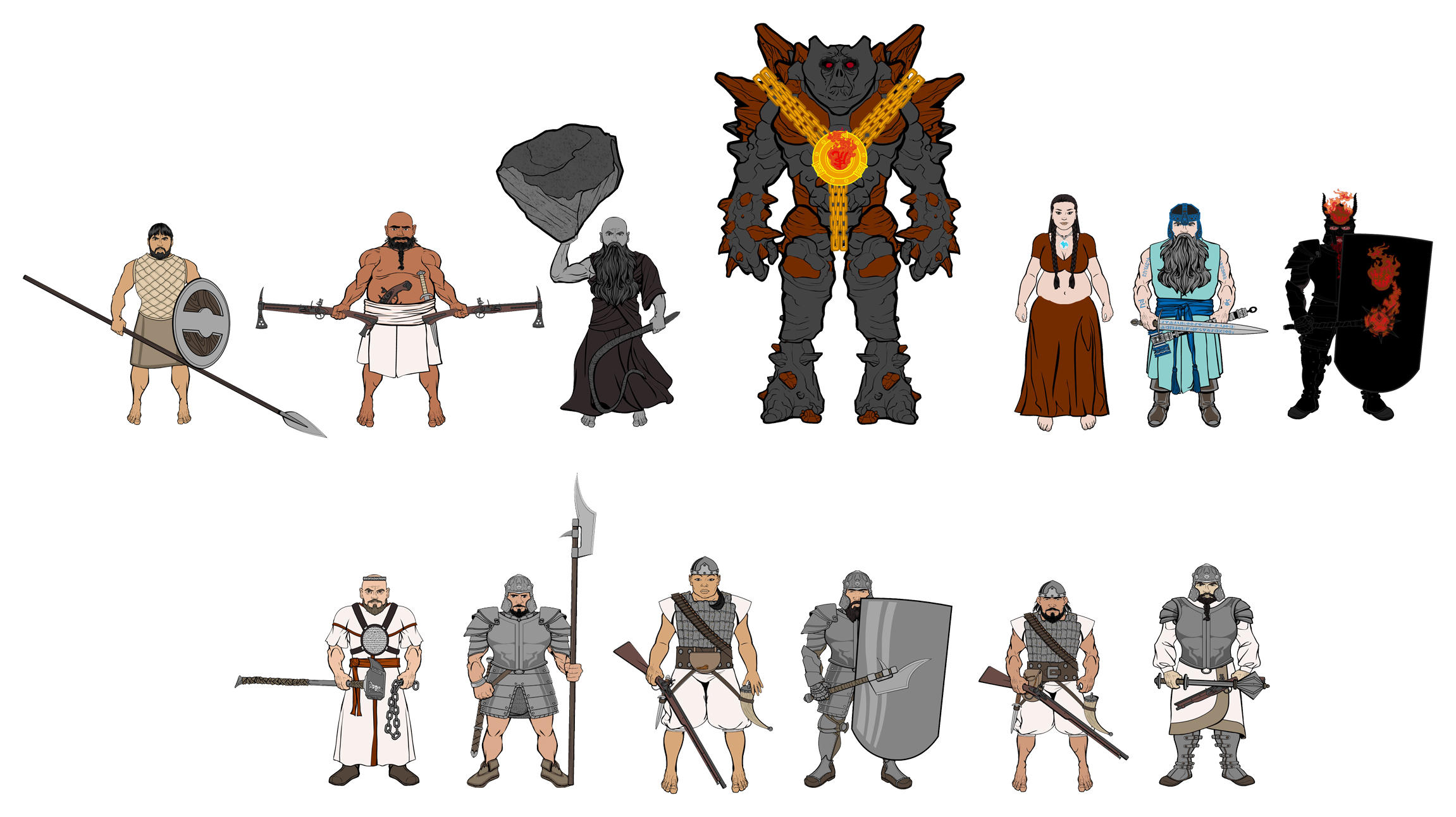
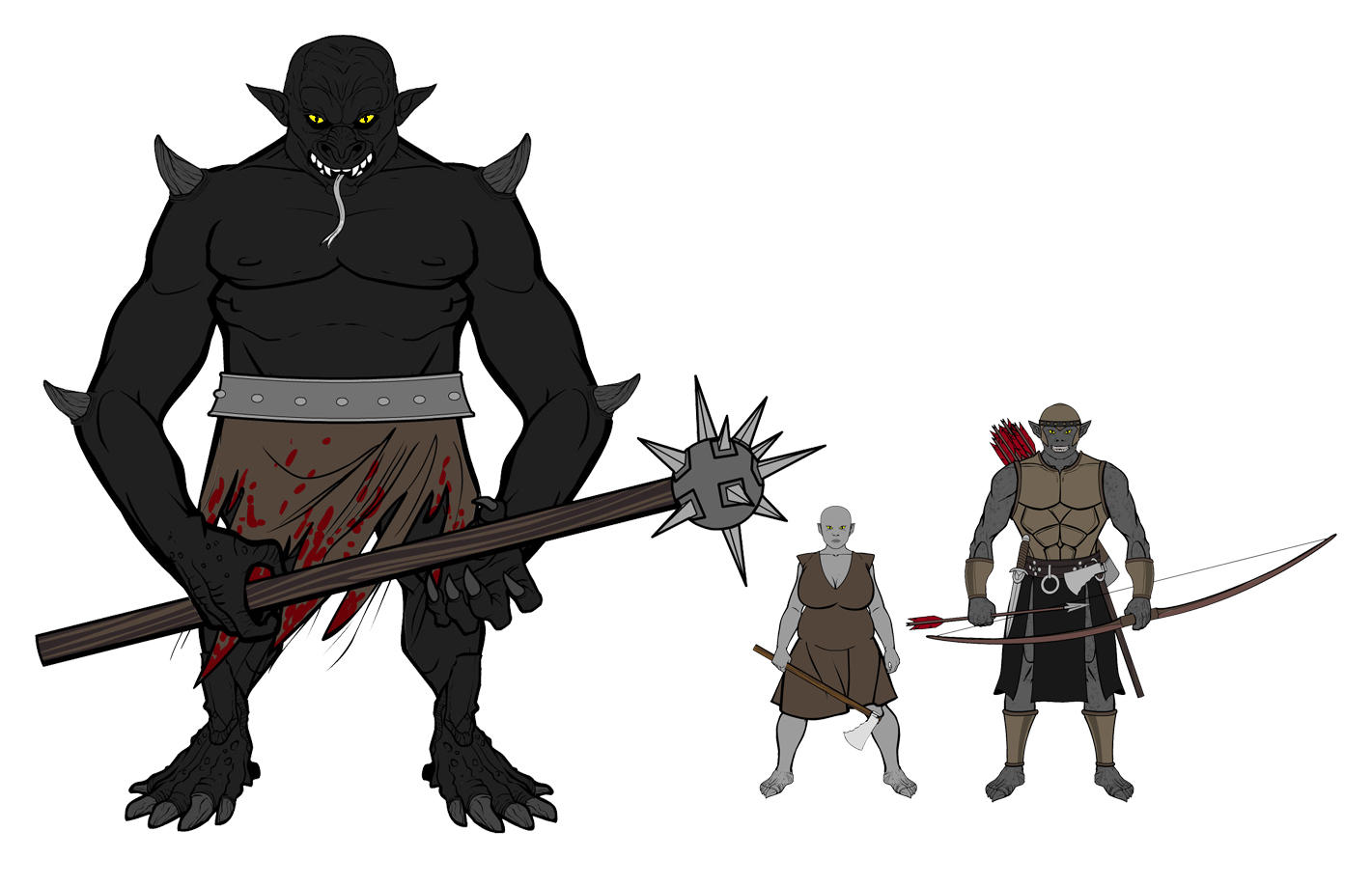
The Gargoyles are the youngest of the Clans, their existence going back only to the dark ages and only having status as a full Clan since the Anarch Revolt. Gargoyles were originally the creation of another Clan of vampires, a Clan of blood sorcerers who kept their magical arts as a great secret and huddled in secluded castles to perfect their art. This Clan of warlocks had few members but aggressive and ambitious. They pursued power over mortals and vampires alike, so to fight their wars for them they created the Gargoyles - a bloodline of loyal slaves to protect the keeps and wizards' towers of the warlock Clan. The Gargoyles proved to be powerful warriors, though they were treated as chattel and their lives were thrown away in great numbers in conflicts that they did not start or understand. They were designed to serve and were also blood bound to the eldest warlocks of the Clan. With the Anarch Revolt and shattering of the blood bond, the Gargoyles rose up against their sorcerer masters, which they now outnumbered by a significant margin, and slew them. Many of the Gargoyles drank the life force of their former masters, gaining the strength of their blood. The ancient of the warlock Clan was eventually slain and his essence consumed by one his own Gargoyle bodyguards, the warlock Clan was replaced by the Gargoyles. To this day, the Gargoyles serve the Sabbat faithfully and abhor slavery and tyranny. Because of their inhuman appearance and general lack of social skills or powers, they must frequently depend on the help of other vampires within the Sabbat in procuring food or hiding their existence from mortals. This is made up for by the fact that Gargoyles are such terrifying warriors and serve as front line fighters against the Camarilla in virtually every battle with them.
Nickname: Slaves (considered derogatory), grotesques, or often merely Gargoyles.
The Supreme Circle utilizes a number of special vampires called shepherds. Shepherds are relatively old and power Sabbat vampires who are tasked by the Supreme Circle with protecting the Sabbat, gaining information for the Supreme Circle, organizing attacks or defensive actions, and otherwise carrying out the will of the Sabbat. In some regard they play a role not unlike that of Archons within the Camarilla, though in theory they do not have as much authority as do the Archons. Some members of the Sabbat object to the shepherds, because they could be perceived as enforcers for the high ranking members of the Sabbat, but most accept their role as necessary to protecting the freedoms afforded by the Sabbat even if they occasionally reduce those freedoms.
Gargoyles
The Gargoyles are the youngest of the Clans, their existence going back only to the dark ages and only having status as a full Clan since the Anarch Revolt. Gargoyles were originally the creation of another Clan of vampires, a Clan of blood sorcerers who kept their magical arts as a great secret and huddled in secluded castles to perfect their art. This Clan of warlocks had few members but aggressive and ambitious. They pursued power over mortals and vampires alike, so to fight their wars for them they created the Gargoyles - a bloodline of loyal slaves to protect the keeps and wizards' towers of the warlock Clan. The Gargoyles proved to be powerful warriors, though they were treated as chattel and their lives were thrown away in great numbers in conflicts that they did not start or understand. They were designed to serve and were also blood bound to the eldest warlocks of the Clan. With the Anarch Revolt and shattering of the blood bond, the Gargoyles rose up against their sorcerer masters, which they now outnumbered by a significant margin, and slew them. Many of the Gargoyles drank the life force of their former masters, gaining the strength of their blood. The ancient of the warlock Clan was eventually slain and his essence consumed by one his own Gargoyle bodyguards, the warlock Clan was replaced by the Gargoyles. To this day, the Gargoyles serve the Sabbat faithfully and abhor slavery and tyranny. Because of their inhuman appearance and general lack of social skills or powers, they must frequently depend on the help of other vampires within the Sabbat in procuring food or hiding their existence from mortals. This is made up for by the fact that Gargoyles are such terrifying warriors and serve as front line fighters against the Camarilla in virtually every battle with them.
Nickname: Slaves (considered derogatory), grotesques, or often merely Gargoyles.
Disciplines: Potence, Fortitude, Flight, Visceratika
Weakness: standard Gargoyle weakness.
Children of Osiris
The Children of Osiris trace their lineage back to ancient Egypt, to the vampire called Osiris. The Children of Osiris did battle with a rival bloodline known as the Followers of Set over the heart of the Nile and the people who drew sustenance from it. It is said that while Osiris himself was slain, that his childe Horus took revenge for their founder's death and destroyed all of the Followers of Set. Since those days, the Children of Osiris have seen themselves as champions against evil, fighting against the most evil elements within the world of the undead, all while striving to be more human as well as humane. For millennia, the Children of Osiris dwelt in Egypt and slowly spread across much of Europe and the Middle East, trying to stay hidden from the mainstream of vampire society while pursing their dreams of combining the immortality of vampirism with the humanity of the living, while also taking action against the worst offenses within the world of the undead. When the Anarch Revolt took place on the heels of the Inquisition, the Children of Osiris saw their opportunity to move against the other vampire Clans who had become thoroughly corrupt and monstrous. They performed a great ritual which broke thousands of blood bonds all over Europe, instantly freeing many of the young vampires who had been slaves of the elders along with the bloodline of Gargoyles who had been created to be servants by vampiric warlocks. As the young vampires joined together to fight against their elders, the Children of Osiris joined their ranks and helped them to overthrow the elders. Eventually, a peace would come between the elders and the young. The Camarilla would form under the rule of the elders. Those who would not bend their knee to the elders formed the Sabbat, lead by the Children of Osiris and the newly freed Gargoyle Clan.
Nickname: acolytes, monks, boy scouts.
Weakness: standard Gargoyle weakness.
Children of Osiris
The Children of Osiris trace their lineage back to ancient Egypt, to the vampire called Osiris. The Children of Osiris did battle with a rival bloodline known as the Followers of Set over the heart of the Nile and the people who drew sustenance from it. It is said that while Osiris himself was slain, that his childe Horus took revenge for their founder's death and destroyed all of the Followers of Set. Since those days, the Children of Osiris have seen themselves as champions against evil, fighting against the most evil elements within the world of the undead, all while striving to be more human as well as humane. For millennia, the Children of Osiris dwelt in Egypt and slowly spread across much of Europe and the Middle East, trying to stay hidden from the mainstream of vampire society while pursing their dreams of combining the immortality of vampirism with the humanity of the living, while also taking action against the worst offenses within the world of the undead. When the Anarch Revolt took place on the heels of the Inquisition, the Children of Osiris saw their opportunity to move against the other vampire Clans who had become thoroughly corrupt and monstrous. They performed a great ritual which broke thousands of blood bonds all over Europe, instantly freeing many of the young vampires who had been slaves of the elders along with the bloodline of Gargoyles who had been created to be servants by vampiric warlocks. As the young vampires joined together to fight against their elders, the Children of Osiris joined their ranks and helped them to overthrow the elders. Eventually, a peace would come between the elders and the young. The Camarilla would form under the rule of the elders. Those who would not bend their knee to the elders formed the Sabbat, lead by the Children of Osiris and the newly freed Gargoyle Clan.
Nickname: acolytes, monks, boy scouts.
Disciplines: Presence, Auspex, Bardo (this is treated as a Thaumaturgy of sorts, Bardo is always the main path and the only three others available are the Path of Ra, the Path of Horus, and the Path of Isis. The Path of Horus is the Path of Father's Vengeance, the Path of Isis is Obeah, and the Path of Ra is like Lure of Flames but instead of fire uses beams of sunlight that do similar damage but only to vampires and not to humans or other creatures not adversely affected by sunlight. For the Path of Ra, clothing provides soak dice, 1 for light clothing, 2 for heavy clothing, and 3 for full body protection. Bardo also allows for the use of rituals, but only those that are defensive, healing, or otherwise "good" in nature)
Weakness: because of their increased humanity, the undead bodies of the Children of Osiris have greater nervous function, their hearts beat, their blood flows, and they feel warm to the touch. This provides advantages when dealing with humans, but also drawbacks as well. They take damage just as humans do, meaning they do not take half damage from basing weapons or firearms and they cannot soak lethal damage with Stamina. Should of Child of Osiris' Humanity ever drop below 6, they lose these advantages and disadvantages and instead find their Willpower reduced by 2 until they recover their Humanity - if this reduces their Willpower to zero or below they commit suicide or slip into a torpor until some magical intervention saves them.
The Camarilla
Weakness: because of their increased humanity, the undead bodies of the Children of Osiris have greater nervous function, their hearts beat, their blood flows, and they feel warm to the touch. This provides advantages when dealing with humans, but also drawbacks as well. They take damage just as humans do, meaning they do not take half damage from basing weapons or firearms and they cannot soak lethal damage with Stamina. Should of Child of Osiris' Humanity ever drop below 6, they lose these advantages and disadvantages and instead find their Willpower reduced by 2 until they recover their Humanity - if this reduces their Willpower to zero or below they commit suicide or slip into a torpor until some magical intervention saves them.
The Camarilla
The Camarilla has essentially the same laws and traditions as it does within the standard setting of the game. They adhere to the six Traditions. Cities are ruled by the prince with Primogen from each Clan representing those Clan's interests. The Camarilla has one Justicar from each of the seven Clans and Archons to enforce their will. The differences are subtle. The Camarilla is harsher in this setting, more willing to kill mortals and to punish disobedient childer and neonates. They have less tolerance of the Clanless as well, and most caitiff are killed by a city's scourge if they are discovered - though it is still the prerogative of the prince.
There is still a modern Anarch movement with the Camarilla, though their numbers are small and they control relatively little territory. In some cities they are quashed completely and the mere act of expressing Anarch sympathies can result in death. For this reason, few Camarilla vampires ever call themselves Anarchs or openly try to oppose the authority of elders - those who feel so inclined usually just flee a city and seek refuge among the Sabbat. Despite this, there are a minority of younger vampires in the Camarilla who are dissatisfied with their lot in unlife and sometimes join together for mutual safety and form coteries. These vampires very seldom call themselves Anarchs though, as the word itself brings on the ire of the elders, and seldom try to directly oppose the laws of the Camarilla or the authority of elders. Rather they simply try to keep a low profile, obey the laws of the Camarilla while staying out politics, and avoid causing or getting into trouble. Eventually, most of these young vampires will see the advantages of working within the system and begin to involve themselves in Camarilla politics.
Baali
The Baali are one of the more influential Clans within the Camarilla. They hold a great deal of social and political power and like to exploit their abilities to their fullest extent. They are known as the Clan of dark secrets, of treachery and deceit, or forbidden vices, and of other dark elements of unlife. They run criminal empires based on drugs, prostitution, pornography, kidnapping, and other unspeakable activities - they also have many politicians and influential mortals in their pockets, likely those who sometimes indulge in forbidden pleasures. The Baali strive to make mortals as immoral, degenerate, violent, and debauched as they themselves are. This gives vampires as a whole better feeding opportunities but ultimately leads to more power for the Baali. Baali believe in completely embracing the evil nature of vampires, to take pleasure in inflicting pain, to use deceit and trickery to exploit others, and to place one own welfare above all others. They might be uncontested rulers of the Camarilla if they were not so generally mistrusted by their fellow vampires. Despite this, Baali know that there is a great value of having allies and that the stability of the Camarilla is vital to their safety and prosperity, so they try their best to balance their own selfishness with the interests of the Sect. In fact, without the wealth and influence of the Baali, the Camarilla would be in a much weaker position and other Clans will reluctantly acknowledge this fact if pressed. The exact origin of the Baali is largely shrouded in mystery, with a mix of legends, lies, and half truths. Many say that the Baali worship demons or that they are demons themselves - there is some truth to this as some Baali do indeed gather together to perform dark rituals, especially the elders of the Clan.
Nickname: demons, devils, imps.
Baali
The Baali are one of the more influential Clans within the Camarilla. They hold a great deal of social and political power and like to exploit their abilities to their fullest extent. They are known as the Clan of dark secrets, of treachery and deceit, or forbidden vices, and of other dark elements of unlife. They run criminal empires based on drugs, prostitution, pornography, kidnapping, and other unspeakable activities - they also have many politicians and influential mortals in their pockets, likely those who sometimes indulge in forbidden pleasures. The Baali strive to make mortals as immoral, degenerate, violent, and debauched as they themselves are. This gives vampires as a whole better feeding opportunities but ultimately leads to more power for the Baali. Baali believe in completely embracing the evil nature of vampires, to take pleasure in inflicting pain, to use deceit and trickery to exploit others, and to place one own welfare above all others. They might be uncontested rulers of the Camarilla if they were not so generally mistrusted by their fellow vampires. Despite this, Baali know that there is a great value of having allies and that the stability of the Camarilla is vital to their safety and prosperity, so they try their best to balance their own selfishness with the interests of the Sect. In fact, without the wealth and influence of the Baali, the Camarilla would be in a much weaker position and other Clans will reluctantly acknowledge this fact if pressed. The exact origin of the Baali is largely shrouded in mystery, with a mix of legends, lies, and half truths. Many say that the Baali worship demons or that they are demons themselves - there is some truth to this as some Baali do indeed gather together to perform dark rituals, especially the elders of the Clan.
Nickname: demons, devils, imps.
Disciplines: Obfuscate, Presence, Infernalism (Like Thaumaturgy, though Path of Corruption is the always the primary Path and other Paths cannot be learned until Coruption is at level 5. Other paths available are Lure of Flames, Daimoinon, Way of Fire, and Path of Conjuration. All Paths use Manipulation + Occult instead of Willpower rolls. Infernalism allows for rituals to be learned as well, as long as they are suitably evil and as long as Infernalsim is at level 5 or higher)
Weakness: The standard Baali weakness.
Weakness: The standard Baali weakness.
Permutations: Many younger Baali have abandoned demons in favor of merely pursuing their own power and pleasure. Instead of Infernalism, these Baali have Dominate.
Lamia
In ancient days, it is said, the founder of the Lamia was a great king, a philosopher and warrior who ruled with an iron fist, but was also known for having wisdom and a harsh sense of honor. The king sought to learn mysteries of life and death and in his contemplation, he studied mystic arts and had an affinity for serpents. In his musing, he came to believe that humanity like the natural world had natural classes, and that the great should rule over the masses and that the weakest should be eliminated - though also the string had a duty to protect and guide their lessors. The king also had a love for women, and had a harem of many wives, for he believed that a great man such as himself must spread his seed as much as possible. When the founder joined the ranks of the undead, he embraced his wives as well and would only give his blood to those women who he thought worthy of being his brides. To his brides, the founder passed along his knowledge of mysticism, along with his combat prowess and his own philosophical views. In the modern nights, the Lamia are still a Clan of only females, with many viewing themselves as the spiritual brides of their founder and others seeing themselves as dark nobles who have a duty to rule and to exalt the strong over the weak. In many Camarilla cities, Lamia are in positions of leadership, though more generally with their sense of honor and martial mentality, they serve as warriors protecting the Traditions and enforcing the will of the elders. Despite having a strong sense of honor and duty, the Lamia still carry the sensual and hedonistic inclinations of their founder and are known to be pleasure seekers as well as warriors.
Nickname: gorgons, serpents.
Disciplines: Animalism, Potence, Serpentis (replace level 2 with Feral Claws and Level 5 with a serpentine version of Horrid Form)
Weakness: it is said that the founder of the Lamia never wanted his childer to drink the blood of, much less ghoul or embrace a male. A Lamia's bite is poisonous to males causing men who are bitten to lose a point from each physical attribute every hour until they die. If a male human imbibes Lamia blood, the same thing will happen. Living male supernatural creatures who have exceptional constitutions (like werewolves, ghouls, faeries, etc.) take a level of aggravated damage per blood point imbibed or bite delivered - also, male ghouls get no benefit from this blood nor can living males become blood bound to the Lamia. Vampires are immune from this, unless they are embraced by a Lamia in which case, they too become poisoned die the final death mere hours after they are embraced. This means that all Lamia and Lamia ghouls are female. After the embrace, Lamia also develop unusually luminescent green or yellowish eyes.
Sybarites
Sometimes known as the Daughters of Cacophony and Sons of Discord, it is unknown how this unusual Clan originated or much about their founder. They rose to prominence in the ancient mediterranean where art and music flourished, where they became known as muses or sirens. The Clan spread with civilization and mere major powers within Rome and well and the great civilizations which followed in in Europe and the Middle East. They have always loved the spotlight and the adoration of mortals, the hustle and bustle of great cities, and most of all their music. Traditionally, the Clan has been mostly female and that is the reason for a common nickname, as well as the curious fact that females within the Clan seem to have a greater innate ability with the Clan's signature Discipline of Melpominee. The Sirens love to be the center of attention and to be culturally relevant as well, they believe that art and especially music can have a great influence on culture and thought and believe that their power in the mortal world lies there. To some degree, they are right and their influence within the music world has sometimes had major effects on mortal society. Unfortunately, the Sirens seldom have any unified goals aside from protecting their ability to make music and bask in adoration, so their power over mortals is sometimes squandered. The Sirens are less interested in vampiric politics as they are in protecting their personal lifestyles, so will often ally of trade favors with who ever they believe will best facilitate that. The Clan sides with the Camarilla because they favor the stability and conservatism of the rule of the elders, which provides them with the most safety and luxury - though they are not the most ardent supporters of the Camarilla and are more likely to rebel than other vampires in the Sect as well as being less than helpful in times of need. Many vampires of the other Clans consider them mostly useless, though the influence that the Sybarites have among the masses can sometimes prove useful when they choose to wield their power to its fullest extent.
Nickname: syrens, muses.
Weakness: it is said that the founder of the Lamia never wanted his childer to drink the blood of, much less ghoul or embrace a male. A Lamia's bite is poisonous to males causing men who are bitten to lose a point from each physical attribute every hour until they die. If a male human imbibes Lamia blood, the same thing will happen. Living male supernatural creatures who have exceptional constitutions (like werewolves, ghouls, faeries, etc.) take a level of aggravated damage per blood point imbibed or bite delivered - also, male ghouls get no benefit from this blood nor can living males become blood bound to the Lamia. Vampires are immune from this, unless they are embraced by a Lamia in which case, they too become poisoned die the final death mere hours after they are embraced. This means that all Lamia and Lamia ghouls are female. After the embrace, Lamia also develop unusually luminescent green or yellowish eyes.
Sybarites
Sometimes known as the Daughters of Cacophony and Sons of Discord, it is unknown how this unusual Clan originated or much about their founder. They rose to prominence in the ancient mediterranean where art and music flourished, where they became known as muses or sirens. The Clan spread with civilization and mere major powers within Rome and well and the great civilizations which followed in in Europe and the Middle East. They have always loved the spotlight and the adoration of mortals, the hustle and bustle of great cities, and most of all their music. Traditionally, the Clan has been mostly female and that is the reason for a common nickname, as well as the curious fact that females within the Clan seem to have a greater innate ability with the Clan's signature Discipline of Melpominee. The Sirens love to be the center of attention and to be culturally relevant as well, they believe that art and especially music can have a great influence on culture and thought and believe that their power in the mortal world lies there. To some degree, they are right and their influence within the music world has sometimes had major effects on mortal society. Unfortunately, the Sirens seldom have any unified goals aside from protecting their ability to make music and bask in adoration, so their power over mortals is sometimes squandered. The Sirens are less interested in vampiric politics as they are in protecting their personal lifestyles, so will often ally of trade favors with who ever they believe will best facilitate that. The Clan sides with the Camarilla because they favor the stability and conservatism of the rule of the elders, which provides them with the most safety and luxury - though they are not the most ardent supporters of the Camarilla and are more likely to rebel than other vampires in the Sect as well as being less than helpful in times of need. Many vampires of the other Clans consider them mostly useless, though the influence that the Sybarites have among the masses can sometimes prove useful when they choose to wield their power to its fullest extent.
Nickname: syrens, muses.
Disciplines: Auspex, Presence, Melpominee
Weakness: Sirens constantly hear music within their minds, they hear their own voice singing songs they have sung before or even new melodies yet to be writen. The sirens feel compelled to sing along and must make a Self Control roll stop singing even temporarily. The difficulty of this roll is based upon the circumstances - resisting singing when trying to be stealthy or in the middle of a somber meeting would be 4, resisting the urge in most circumstances would be 6, while resisting when the siren is bored or alone would be 8. To resist singing when asked to sing is the most difficult with a difficulty of 9 to resist. A successful roll allows the siren to force themselves into silence during the important task that singing would disrupt (like trying to eavesdrop on a conversation or sneak into a rival's haven) or allows for 1 turn of silence per success if there is no such urgent need. Singing increases the difficulty of any relevant task (such as listening, stealth, making a good impression in certain social situations) by +2.
Samedi
The Samedi are among some of the most feared of vampires, they are even disconcerting to their own kind because their terrible appearance reflects to true nature of vampires - abominations, unholy monstrosities, ambulatory corpses. The Samedi resemble rotting corpses, either putrid and slime covered, perhaps crawling with insects, or withered and dried with bones protruding from papery flesh. Mortals recoil in horror from the sight of them and even vampires find their appearance highly unpleasant. The Samedi not only reflect death in their appearance, they seem to have an obsession with death and the undead state - which likely relates to their mastery of necromancy and the ability to speak with ghosts and animate the dead. The Samedi are also amazing survivors, able to thwart death at every turn. The Samedi attribute to their ingenuity and abilities while some others might say that beneath their hideous appearance that they are cowards. The Samedi, because of their horrible visage and association with death, tend to be kept at a distance by other kindred. Though they have proven their loyalty to the Camarilla on many occasions and their unique powers are frequently needed by other Clans, they are friends best kept at a distance. Many make a practice of only embracing humans who have some terminal illness or that are about to die, perhaps because they realize what a terrible curse being embraced into the Samedi Clan can be, or perhaps because they believe that the outlook of a dying human prepares someone for unlife in the Clan of death. Because they are highly skilled at stealth as well as necromancy, they are sometimes valued as spies or informants - they may not know as many dark secrets as the Baali do, but they are more trusted to provide the truth a a fair price.
Nickname: stiffs, liches.
Weakness: Sirens constantly hear music within their minds, they hear their own voice singing songs they have sung before or even new melodies yet to be writen. The sirens feel compelled to sing along and must make a Self Control roll stop singing even temporarily. The difficulty of this roll is based upon the circumstances - resisting singing when trying to be stealthy or in the middle of a somber meeting would be 4, resisting the urge in most circumstances would be 6, while resisting when the siren is bored or alone would be 8. To resist singing when asked to sing is the most difficult with a difficulty of 9 to resist. A successful roll allows the siren to force themselves into silence during the important task that singing would disrupt (like trying to eavesdrop on a conversation or sneak into a rival's haven) or allows for 1 turn of silence per success if there is no such urgent need. Singing increases the difficulty of any relevant task (such as listening, stealth, making a good impression in certain social situations) by +2.
Samedi
The Samedi are among some of the most feared of vampires, they are even disconcerting to their own kind because their terrible appearance reflects to true nature of vampires - abominations, unholy monstrosities, ambulatory corpses. The Samedi resemble rotting corpses, either putrid and slime covered, perhaps crawling with insects, or withered and dried with bones protruding from papery flesh. Mortals recoil in horror from the sight of them and even vampires find their appearance highly unpleasant. The Samedi not only reflect death in their appearance, they seem to have an obsession with death and the undead state - which likely relates to their mastery of necromancy and the ability to speak with ghosts and animate the dead. The Samedi are also amazing survivors, able to thwart death at every turn. The Samedi attribute to their ingenuity and abilities while some others might say that beneath their hideous appearance that they are cowards. The Samedi, because of their horrible visage and association with death, tend to be kept at a distance by other kindred. Though they have proven their loyalty to the Camarilla on many occasions and their unique powers are frequently needed by other Clans, they are friends best kept at a distance. Many make a practice of only embracing humans who have some terminal illness or that are about to die, perhaps because they realize what a terrible curse being embraced into the Samedi Clan can be, or perhaps because they believe that the outlook of a dying human prepares someone for unlife in the Clan of death. Because they are highly skilled at stealth as well as necromancy, they are sometimes valued as spies or informants - they may not know as many dark secrets as the Baali do, but they are more trusted to provide the truth a a fair price.
Nickname: stiffs, liches.
Disciplines: Fortitude, Obfuscate, Necromancy (Thanatosis is now a path)
Weakness: the standard Samedi weakness.
Lhiannan
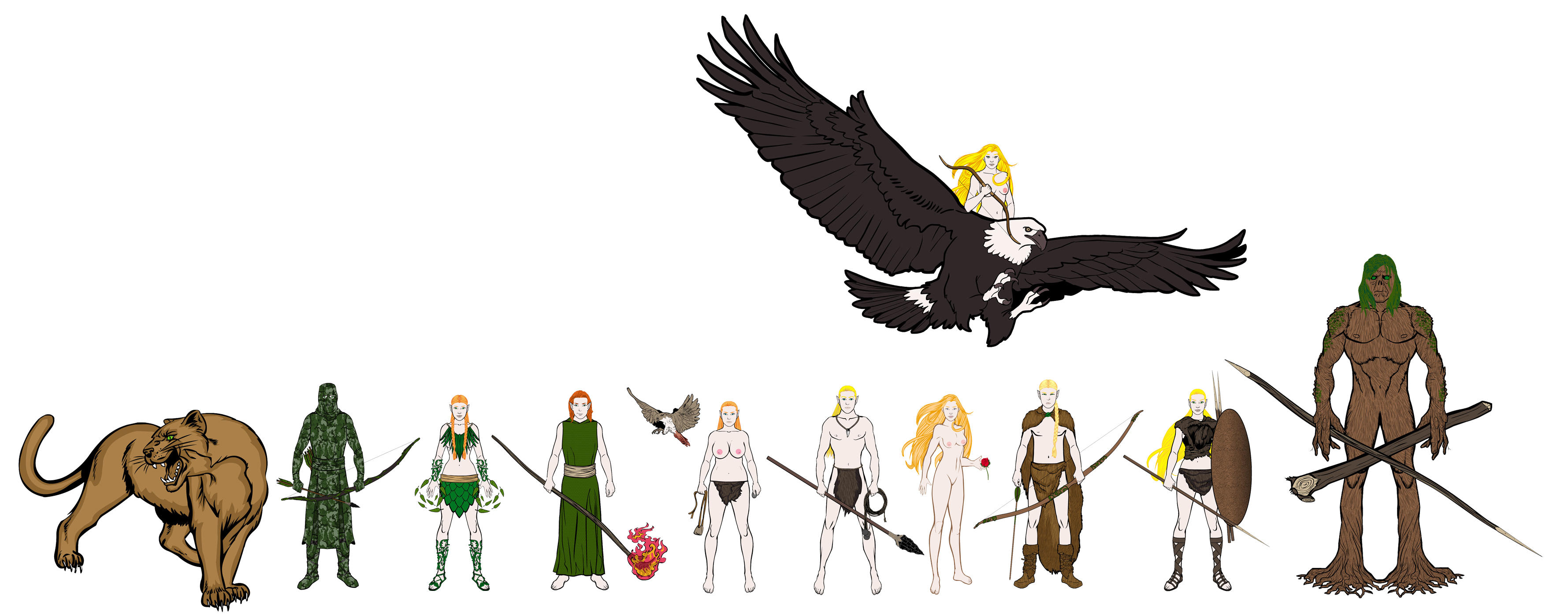
The Lhiannan are priests and priestesses of the undead. They have always seen vampires as a part of nature and not a damned condition to be feared or lamented. They practice an ancient mystical art, Ogham, which draws from many ancient pagan traditions. In ancient days, the Lhiannan were blood priests in agrarian tribes, leading them in sacrifices, fertility rights, and finding their own connection to the seasons and the natural world. Now the Lhiannan cannot be as open among mortals as they once were, but still like to influence human believe and spirituality. They still see themselves as spiritual guide for humanity, there to help humans commune with things greater than themselves. This includes being patrons of the arts, supporting political and social causes, and sometimes even creating cults that they can lead as they did in the ancient days. They feel the most comfortable in small rural communities instead of big cities. Even those Lhiannan who dwell in cities often have havens on the outskirts, in suburbs, or even parks where they can be closer to nature. Those cities which are most influenced by the Lhiannan are those not far from rural countryside or vast wildernesses - most of the Lhiannan will live outside of the city and only make the occasional journey to handle Clan business, deal with politics, or for some special purpose. Perhaps more than any vampires, the Lhiannan continue to treasure human sexuality and many of their rituals involve sexual congress with each other or with mortals. The darker side of their desire to guide humanity is a need for control and power, to be worshiped and desired by mortal followers.
Nicknames: Druids, tree huggers.
Weakness: the standard Samedi weakness.
Lhiannan
The Lhiannan are priests and priestesses of the undead. They have always seen vampires as a part of nature and not a damned condition to be feared or lamented. They practice an ancient mystical art, Ogham, which draws from many ancient pagan traditions. In ancient days, the Lhiannan were blood priests in agrarian tribes, leading them in sacrifices, fertility rights, and finding their own connection to the seasons and the natural world. Now the Lhiannan cannot be as open among mortals as they once were, but still like to influence human believe and spirituality. They still see themselves as spiritual guide for humanity, there to help humans commune with things greater than themselves. This includes being patrons of the arts, supporting political and social causes, and sometimes even creating cults that they can lead as they did in the ancient days. They feel the most comfortable in small rural communities instead of big cities. Even those Lhiannan who dwell in cities often have havens on the outskirts, in suburbs, or even parks where they can be closer to nature. Those cities which are most influenced by the Lhiannan are those not far from rural countryside or vast wildernesses - most of the Lhiannan will live outside of the city and only make the occasional journey to handle Clan business, deal with politics, or for some special purpose. Perhaps more than any vampires, the Lhiannan continue to treasure human sexuality and many of their rituals involve sexual congress with each other or with mortals. The darker side of their desire to guide humanity is a need for control and power, to be worshiped and desired by mortal followers.
Nicknames: Druids, tree huggers.
Disciplines: Animalism, Presence, Ogham (Ogham is the first path that all Lhiannan learn, other paths available to them are the Green Path, the Path of Blood, Neptune's Might, the Path of Mars, the Berserk Path, and Weather Control. They can also learn rituals as normal.)
Weakness: the Lhiannan are most at home in natural surroundings, places with trees, crops, or the bare earth. For each day that a Lhiannan is deprived of such surroundings, they suffer a cumulative -1 penalty to all dice pools down to the Lhiannan's Stamina. Recovering these lost dice requires at least a full day in a rural or wilderness location, though a point of Willpower can be spent to ignore the penalty for a scene.
Permutations: there are some Lhiannan who dedicate themselves to fighting and combat. In modern times they are called beserkers, though there are many other names depending on the Lhiannan's culture or ideology. Berserkers have Potence as a Clan Discipline and their main Path is either the Berserk Path (if Potence replaces Presence) or Path of Mars (if Potence replaces Animalism).
Kiasyd
According to legend, the founder of the Kiasyd was either and unseelie fae or a carried the blood of the dark fae in her veins before being embraced. For millennia the Kiasyd have been rulers of the night, especially in northern Europe before the coming of Christendom. They were mysterious faerie kings and queens, feared and adored by humanity. As civilization progressed, the strange nature and traditional ways of the Kiasyd could not adapt to the changing world. They were forced to withdraw more and more from the world of mortals and from positions of leadership and dwell more in the shadows. In the modern nights, they still have power among the undead and are some of the staunchest defenders of conservatism, tradition, and rule by the elders. Because of their odd appearance and powers, they cannot deal with humans directly as often as thy would prefer, though they make extensive use of ghouls to serve as proxies and even have a number of revenants ghoul families that have served them for countless generations. Even with their revenant families helping them and their powers of persuasion, as time passes the Kiasyd become increasingly irrelevant in the modern world and in turn because less and less interested in human politics and influence. However, they still have tremendous power and influence in the world of the undead and especially within the Camarilla. Though many other kindred consider them haughty relics of a bygone age, they still hold many of the higher ranks within the Camarilla. Their leadership helps keep the Sect running smoothly and for this they can still command respect.
Nickname: weirdlings, elves.
Weakness: the Lhiannan are most at home in natural surroundings, places with trees, crops, or the bare earth. For each day that a Lhiannan is deprived of such surroundings, they suffer a cumulative -1 penalty to all dice pools down to the Lhiannan's Stamina. Recovering these lost dice requires at least a full day in a rural or wilderness location, though a point of Willpower can be spent to ignore the penalty for a scene.
Permutations: there are some Lhiannan who dedicate themselves to fighting and combat. In modern times they are called beserkers, though there are many other names depending on the Lhiannan's culture or ideology. Berserkers have Potence as a Clan Discipline and their main Path is either the Berserk Path (if Potence replaces Presence) or Path of Mars (if Potence replaces Animalism).
Kiasyd
According to legend, the founder of the Kiasyd was either and unseelie fae or a carried the blood of the dark fae in her veins before being embraced. For millennia the Kiasyd have been rulers of the night, especially in northern Europe before the coming of Christendom. They were mysterious faerie kings and queens, feared and adored by humanity. As civilization progressed, the strange nature and traditional ways of the Kiasyd could not adapt to the changing world. They were forced to withdraw more and more from the world of mortals and from positions of leadership and dwell more in the shadows. In the modern nights, they still have power among the undead and are some of the staunchest defenders of conservatism, tradition, and rule by the elders. Because of their odd appearance and powers, they cannot deal with humans directly as often as thy would prefer, though they make extensive use of ghouls to serve as proxies and even have a number of revenants ghoul families that have served them for countless generations. Even with their revenant families helping them and their powers of persuasion, as time passes the Kiasyd become increasingly irrelevant in the modern world and in turn because less and less interested in human politics and influence. However, they still have tremendous power and influence in the world of the undead and especially within the Camarilla. Though many other kindred consider them haughty relics of a bygone age, they still hold many of the higher ranks within the Camarilla. Their leadership helps keep the Sect running smoothly and for this they can still command respect.
Nickname: weirdlings, elves.
Disciplines: Dominate, Celerity, Auspex, Fae Sorcery (Koldunic Sorcery with Obtenebration and Mytherceria as a Paths but no Way of Fire. Fae Sorcery also has no Rituals). Most Kiasyd automatically start with one level of Fae Sorcery.
Weakness: Cold Iron does aggravated damage to the Kiasyd, even a touch of cold iron does a level of aggravated damage to them. In addition, the more they advance in Faerie Magic, the less human they look. With no Faerie Magic, they look as they did in life but slightly paler. At level one their skin becomes more pale, their eyes darken or lighten, and their body becomes thinner. By the time they reach level five or more, their skin is so pale and white that it seems luminescent especially in the moonlight, their eyes are pools of pure darkness or brightly glowing, their ears have become pointed, they have gained over a foot in height from their mortal days, and have an unnaturally thin and delicate build. The change in the Kiasyd's eyes are based on his or her primary Fae Sorcery Path - Obtenebration makes their eyes darken until they become completely pitch black and the Way if Earth makes their eyes look like shining metallic orbs. The other Paths make their eyes luminescent and eventually glow - Mytherceria is violet, Way of Water is bluish green, and the Way of Wind is gray to white. The game effects of this are that the Kiasyd lose one die from most social interactions with mundane mortals for every level of Faerie Magic they learn, up to five. Also, at level 3 or more the Kiasyd is obviously inhuman and risks breaking the Masquerade by appearing in public.
Permutations: A handful of very young Kiasyd, those embraced in the last fifty years, who do not come from Revenant families, reject their faerie nature and faerie sorcery. Because they have done this, they retain their human appearance aside from having unusually pale skin. They are much more active in the world of humanity and more able to use technology than their Clan mates, giving them some major advantages. They do not have Fae Sorcery as a Discipline nor do they get an extra point of it, though they likewise don't suffer the negative side effects of the Discipline. They do, however, suffer a +2 penalty to all difficulties of social rolls with the regular Kiasyd because they are seen as betraying the traditions and heritage of the Clan.
Salubri
The Salubri Clan is descended from Saulot, the great vampire who journeyed to the far east in search of wisdom. Some scholars say that in the east, Saulot found enlightenment, either Golconda or some other state that allows kindred to defeat or suppress the beast. The Salubri themselves strive to follow in their founders footsteps, looking for enlightenment - though the prevailing thought among most modern Salubri is that truly defeating the beast is folly and that they must learn to be at peace with their own beasts and thus end the inner struggle - which entails allowing the beast to frequently sate its desires. The Clan went through a major schism when the Anarch Revolt began, with many of the younger vampires siding with the rebels and adopting an almost pacifistic ideology of non-violence and humane behavior with the more pragmatic elders rejecting these ideals. While many Salubri helped the Anarchs and ultimately joined the Sabbat, the majority of the Clan sided with the elders and helped in the creation of the Camarilla - believing that the more egalitarian and soft hearted philosophies of the rabble were incompatible with human and vampiric nature.
The Salubri still consider themselves idealists and philosophers, but their views of both humanity and vampires are that they are savage and foolish by nature and that the elites must lead the masses and decide what is best for them. Which is why they believe so strongly in the rule of the elders and of the right of vampires to rule of humanity. The Salubri believe that as scholars, that they should try to stay aloof from vampiric politics within the Camarilla, though they are often sought after as advisers and sometimes get drawn into politics that way. While seldom holding direct power in a city, they are often the trusted advisors to princes and sometimes even the power behind the throne. The Salubri usually only have moderate power within the mortal world, aside from a handful of ghouls to help procure blood for them, though they occasionally do like to have some contact with the academic community. Salubri are the most common Clan of western vampires in the far east where they are known as the Wu Zao.
Nicknames: cyclops, triclops, unicorns.
Weakness: Cold Iron does aggravated damage to the Kiasyd, even a touch of cold iron does a level of aggravated damage to them. In addition, the more they advance in Faerie Magic, the less human they look. With no Faerie Magic, they look as they did in life but slightly paler. At level one their skin becomes more pale, their eyes darken or lighten, and their body becomes thinner. By the time they reach level five or more, their skin is so pale and white that it seems luminescent especially in the moonlight, their eyes are pools of pure darkness or brightly glowing, their ears have become pointed, they have gained over a foot in height from their mortal days, and have an unnaturally thin and delicate build. The change in the Kiasyd's eyes are based on his or her primary Fae Sorcery Path - Obtenebration makes their eyes darken until they become completely pitch black and the Way if Earth makes their eyes look like shining metallic orbs. The other Paths make their eyes luminescent and eventually glow - Mytherceria is violet, Way of Water is bluish green, and the Way of Wind is gray to white. The game effects of this are that the Kiasyd lose one die from most social interactions with mundane mortals for every level of Faerie Magic they learn, up to five. Also, at level 3 or more the Kiasyd is obviously inhuman and risks breaking the Masquerade by appearing in public.
Permutations: A handful of very young Kiasyd, those embraced in the last fifty years, who do not come from Revenant families, reject their faerie nature and faerie sorcery. Because they have done this, they retain their human appearance aside from having unusually pale skin. They are much more active in the world of humanity and more able to use technology than their Clan mates, giving them some major advantages. They do not have Fae Sorcery as a Discipline nor do they get an extra point of it, though they likewise don't suffer the negative side effects of the Discipline. They do, however, suffer a +2 penalty to all difficulties of social rolls with the regular Kiasyd because they are seen as betraying the traditions and heritage of the Clan.
Salubri
The Salubri Clan is descended from Saulot, the great vampire who journeyed to the far east in search of wisdom. Some scholars say that in the east, Saulot found enlightenment, either Golconda or some other state that allows kindred to defeat or suppress the beast. The Salubri themselves strive to follow in their founders footsteps, looking for enlightenment - though the prevailing thought among most modern Salubri is that truly defeating the beast is folly and that they must learn to be at peace with their own beasts and thus end the inner struggle - which entails allowing the beast to frequently sate its desires. The Clan went through a major schism when the Anarch Revolt began, with many of the younger vampires siding with the rebels and adopting an almost pacifistic ideology of non-violence and humane behavior with the more pragmatic elders rejecting these ideals. While many Salubri helped the Anarchs and ultimately joined the Sabbat, the majority of the Clan sided with the elders and helped in the creation of the Camarilla - believing that the more egalitarian and soft hearted philosophies of the rabble were incompatible with human and vampiric nature.
The Salubri still consider themselves idealists and philosophers, but their views of both humanity and vampires are that they are savage and foolish by nature and that the elites must lead the masses and decide what is best for them. Which is why they believe so strongly in the rule of the elders and of the right of vampires to rule of humanity. The Salubri believe that as scholars, that they should try to stay aloof from vampiric politics within the Camarilla, though they are often sought after as advisers and sometimes get drawn into politics that way. While seldom holding direct power in a city, they are often the trusted advisors to princes and sometimes even the power behind the throne. The Salubri usually only have moderate power within the mortal world, aside from a handful of ghouls to help procure blood for them, though they occasionally do like to have some contact with the academic community. Salubri are the most common Clan of western vampires in the far east where they are known as the Wu Zao.
Nicknames: cyclops, triclops, unicorns.
Disciplines: Auspex, Dominate, and one Discipline of choice. The Salubri are a Clan of Scholars and study many different Disciplines. A Salubri may select any non-exclusive Discipline as its third Clan Discipline, it may choose any one of the following Disciplines: Animalism, Celerity, Fortitude, Obfuscate, Potence, or Presence.
Weakness: The Salubri are scholars by nature, and each of them has a special focus. At character creation, the player must select an area of study. Whenever the opportunity arises to learn something about this subject, the player must make a Willpower roll (difficulty 6) to avoid pursuing that lead to the exclusion of all else.
Independents
Brotherhood of Blood
The Brotherhood of Blood began when a ruthless and power hungry megalomaniac was embraced in the ancient days of vampires. The founder of Brotherhood felt the power of the vampiric blood in his veins and sought more, sought to drain the souls of other vampires, to become a blood god. He went to war against the other Clan founders and barely escaped with his unlife. He realized that he needed an army and began to embrace childer and to craft them into perfect killers. He realized that his minions must work together to destroy powerful kindred, and thus works to make them think and act as one. The army drank each other's blood in a terrible ceremony that bound them all together, and together hunted and preyed upon other vampires. Over time, the Brotherhood developed many strange powers and side effects from their unity, including looking more and more alike, being able to mystically share blood or exchange organs, and even sensing each other's injuries. Eventually the other Clans realized that they must destroy the Brotherhood of Blood once and for all. The sorcerers and blood priests among the other Clans placed a great curse upon the Blood Brothers, making them fall upon each other with terrible ferocity. The Brotherhood of Blood collapsed upon itself as brother slew brother in a frenzy of destruction while warriors of the other Clans picked off the survivors. For many centuries, they were thought destroyed, though during the middle ages some Blood Brother activity was spotted again, though they were now much less organized and were now divided into small autonomous "hives" which had to be more conservative and cautious. They are still hated and feared by most kindred, though in some rare cases they will be hired as mercenary warriors by particularly ruthless and reckless undead - though any association with Blood Brothers is strictly forbidden within the Camarilla.
Weakness: The Salubri are scholars by nature, and each of them has a special focus. At character creation, the player must select an area of study. Whenever the opportunity arises to learn something about this subject, the player must make a Willpower roll (difficulty 6) to avoid pursuing that lead to the exclusion of all else.
Independents
Brotherhood of Blood
The Brotherhood of Blood began when a ruthless and power hungry megalomaniac was embraced in the ancient days of vampires. The founder of Brotherhood felt the power of the vampiric blood in his veins and sought more, sought to drain the souls of other vampires, to become a blood god. He went to war against the other Clan founders and barely escaped with his unlife. He realized that he needed an army and began to embrace childer and to craft them into perfect killers. He realized that his minions must work together to destroy powerful kindred, and thus works to make them think and act as one. The army drank each other's blood in a terrible ceremony that bound them all together, and together hunted and preyed upon other vampires. Over time, the Brotherhood developed many strange powers and side effects from their unity, including looking more and more alike, being able to mystically share blood or exchange organs, and even sensing each other's injuries. Eventually the other Clans realized that they must destroy the Brotherhood of Blood once and for all. The sorcerers and blood priests among the other Clans placed a great curse upon the Blood Brothers, making them fall upon each other with terrible ferocity. The Brotherhood of Blood collapsed upon itself as brother slew brother in a frenzy of destruction while warriors of the other Clans picked off the survivors. For many centuries, they were thought destroyed, though during the middle ages some Blood Brother activity was spotted again, though they were now much less organized and were now divided into small autonomous "hives" which had to be more conservative and cautious. They are still hated and feared by most kindred, though in some rare cases they will be hired as mercenary warriors by particularly ruthless and reckless undead - though any association with Blood Brothers is strictly forbidden within the Camarilla.
Blood Brothers are embraced from the blood of the entire hive mixed together, the resulting childe is one generation higher than the lowest member of the hive. No hive may have more than 13 members, a mystical number among the kindred, and the 14th member so embraced will cause the hive to split into two seven member hives who will immediately seek to destroy each other. When a mortal is embraced into a hive, all of their hair falls out and their features blend with the members of the new hive until all members look identical - so if a hive of white members embraced a black man, all of the older members of the hive would darken slightly as the new childe significantly lightened so that all members become the same. The Brotherhood of Blood respects great physical strength and very few females are embraced into the Clan, though when a female is embraced she takes on masculine features as the members of her hive become more feminine in appearance. There are a few hives where every member is androgynous because of the frequent embrace of females, rarer still are hives of females sometimes called Blood Sisters. It is thought that the Clan founder went mad when his childer began to destroy each other and either destroyed himself or sunk not a deep torpor in some remote location
Nicknames: blood brothers, clones, freaks.
Nicknames: blood brothers, clones, freaks.
Disciplines: Potence, Celerity, Sanguinus
Weakness: Blood Brothers feel the pain of any other Blood Brother in the their hive, as in the book. In addition, any Blood Brother who sees or knowingly gets into close proximity with a Blood Brother from another hive must roll to resist frenzy with a difficulty of 8. A failed roll means that the Blood Brother frenzies and attacks the rival hive member in a frenzy. Success means that the Blood Brother endures the other's presence for a scene before needing to roll again, though during that time all difficulties to resist Frenzy are increased by two. All of the Blood Brothers in a hive are effectively blood bound to each other, making them immune to being bound by others as well as totally loyal to each other.
Ahrimanes
Many centuries ago one of the ancients sought to abandon civilization, so he left his Persian homeland and journeyed across the globe searching new lands and encountering new cultures. In the far off Americas, the ancient was able to learn of spirit magic from the shamans there, how to commune with and even to control the spirits of animals and not merely their minds as other vampires did. It took him many years, but eventually the ancient learned mastery over the spirits, at the expense of the potency of his own blood. Since that time, his progeny have wandered the wild places of the world, interacting with beast spirits and the people who still believe in them. They value their independence and join no Sect, nor do they allow Sect boundaries to limit their travel of their behavior. Because of this, they are often disliked by both Sects who see them as dangerous loose cannons. The Ahrimanes prefer regions of the world the the other vampires have less desire for - jungles, deep forests, third world nations and villages, and other places where people still believe in spirits. Since the age of colonialism of the Ahrimane Clan has come into conflict more frequently with other Clans as traditional cultures have been displaced pressured into assimilation and the Ahrimanes lose ground to the combined might of civilization and western kindred. The regions with the largest Ahrimane presence are sub-Saharan Africa and the villages and jungles of South America.
Nickname: wildcats, cats, hunters.
Weakness: Blood Brothers feel the pain of any other Blood Brother in the their hive, as in the book. In addition, any Blood Brother who sees or knowingly gets into close proximity with a Blood Brother from another hive must roll to resist frenzy with a difficulty of 8. A failed roll means that the Blood Brother frenzies and attacks the rival hive member in a frenzy. Success means that the Blood Brother endures the other's presence for a scene before needing to roll again, though during that time all difficulties to resist Frenzy are increased by two. All of the Blood Brothers in a hive are effectively blood bound to each other, making them immune to being bound by others as well as totally loyal to each other.
Ahrimanes
Many centuries ago one of the ancients sought to abandon civilization, so he left his Persian homeland and journeyed across the globe searching new lands and encountering new cultures. In the far off Americas, the ancient was able to learn of spirit magic from the shamans there, how to commune with and even to control the spirits of animals and not merely their minds as other vampires did. It took him many years, but eventually the ancient learned mastery over the spirits, at the expense of the potency of his own blood. Since that time, his progeny have wandered the wild places of the world, interacting with beast spirits and the people who still believe in them. They value their independence and join no Sect, nor do they allow Sect boundaries to limit their travel of their behavior. Because of this, they are often disliked by both Sects who see them as dangerous loose cannons. The Ahrimanes prefer regions of the world the the other vampires have less desire for - jungles, deep forests, third world nations and villages, and other places where people still believe in spirits. Since the age of colonialism of the Ahrimane Clan has come into conflict more frequently with other Clans as traditional cultures have been displaced pressured into assimilation and the Ahrimanes lose ground to the combined might of civilization and western kindred. The regions with the largest Ahrimane presence are sub-Saharan Africa and the villages and jungles of South America.
Nickname: wildcats, cats, hunters.
Disciplines: Animalism, Obfuscate, Spiritus
Weakness: Ahrimanes have a more powerful spirit than do other vampires, which allows them to commune with the spirits of beasts and gives them their powers. The downside to this is that their blood becomes weaker. They cannot create a blood bond nor will their blood create ghouls, it has no effect on vampires, humans, or beasts that drink it.
Brujah
The Brujah are a Clan of scholars and philosophers. They pride themselves on their rationality and empiricism. They also believe in the denial of human, as well as vampiric, emotion. Theybelieve in starving the Beast of its hatred, lust, and passion. In a way, they were early transhumanist kindred, with a focus on transcending the mental shackles that imprisoned thinking beings. They believe that through overcoming their emotions and in acting with complete logic and reason, that they become something more than mere animals that most humans (and vampires) never manage to rise above. They also believe in complete impartiality, and will often take the side of some political rival if they believe that the rival makes a well reasoned point. Despite rejecting the Beast, they can be some of the most cruel of all the kindred, for compassion is as abhorrent to them as any emotion. Because of approach towards truth and biases, they are often sought after as judges and mediators among vampires and sometimes act as intermediaries between the Sabbat and Camarilla or between conflicting Clans. Brujah of the modern era also study science as well as philosophy, considering themselves to be in part the founders of modern scientific thought - in ancient days the were cynics and stoics. All too often, the Brujah have few social skills or subtlety, preferring to influence mortals through the brute force of Dominate or the blood bond instead appealing to them in other ways. Because of this, and because they reject the craving for power or even human company, the Brujah seldom have much influence within the mortal world aside from the few Brujah who like to involve themselves in the world of human academia. Some Brujah, like the cynics of antiquity, reject material possessions and try to live a spartan existence devoid of pleasures or comforts.
Nickname: sages, cynics, Spocks, arbiters.
Weakness: Ahrimanes have a more powerful spirit than do other vampires, which allows them to commune with the spirits of beasts and gives them their powers. The downside to this is that their blood becomes weaker. They cannot create a blood bond nor will their blood create ghouls, it has no effect on vampires, humans, or beasts that drink it.
Brujah
The Brujah are a Clan of scholars and philosophers. They pride themselves on their rationality and empiricism. They also believe in the denial of human, as well as vampiric, emotion. Theybelieve in starving the Beast of its hatred, lust, and passion. In a way, they were early transhumanist kindred, with a focus on transcending the mental shackles that imprisoned thinking beings. They believe that through overcoming their emotions and in acting with complete logic and reason, that they become something more than mere animals that most humans (and vampires) never manage to rise above. They also believe in complete impartiality, and will often take the side of some political rival if they believe that the rival makes a well reasoned point. Despite rejecting the Beast, they can be some of the most cruel of all the kindred, for compassion is as abhorrent to them as any emotion. Because of approach towards truth and biases, they are often sought after as judges and mediators among vampires and sometimes act as intermediaries between the Sabbat and Camarilla or between conflicting Clans. Brujah of the modern era also study science as well as philosophy, considering themselves to be in part the founders of modern scientific thought - in ancient days the were cynics and stoics. All too often, the Brujah have few social skills or subtlety, preferring to influence mortals through the brute force of Dominate or the blood bond instead appealing to them in other ways. Because of this, and because they reject the craving for power or even human company, the Brujah seldom have much influence within the mortal world aside from the few Brujah who like to involve themselves in the world of human academia. Some Brujah, like the cynics of antiquity, reject material possessions and try to live a spartan existence devoid of pleasures or comforts.
Nickname: sages, cynics, Spocks, arbiters.
Disciplines: Dominate, Fortitude, Temporis
Weakness: Standard True Brujah weakness.
Nagaraja
The Nagaraja are a Clan that long held power and influence in southern Asia and are responsible for the myths of the rakshasa, for like those creatures they must consume human flesh. The Nagaraja are masters of deceit and trickery, with the ability to hide themselves, change their appearance, create illusions, and to even make people's worst fears seem to come to life. As a Clan and individually the Nagaraja love power and control, love the rush of having others at their mercy, love wealth and opulence, but above all love the taste of human flesh. The Nagaraja are no mad dogs though, they see themselves as lords of mortals, and select only those candidates for embrace who they believe have the intellect, charisma, refinement, and ruthlessness to be dark lords of illusion. Nagaraja often amass great sums of wealth and power over mortals, through the use of their powers and with ghoul servants. The Nagaraja also embrace personal freedom from the laws of men and vampires and are seldom willing to submit to the will of others. Because of this, Nagaraja often have brutal conflicts with each other over territory or out of a sense of rivalry, and Diablerie is a common practice among them - sires virtually always keep childer blood bound to them for fear of treachery or Diablerie. Because of the independent nature of the Nagaraja and their unwillingness to submit to authority, they have maintained their distance from both the Camarilla and the Sabbat, though there are individual Nagaraja in each sect. The Nagaraja prefer to dwell in impoverished or war torn regions of the world where life is cheap and death or disappearances are commonplace.
Nickname: flesh eaters, boogeymen.
Weakness: Standard True Brujah weakness.
Nagaraja
The Nagaraja are a Clan that long held power and influence in southern Asia and are responsible for the myths of the rakshasa, for like those creatures they must consume human flesh. The Nagaraja are masters of deceit and trickery, with the ability to hide themselves, change their appearance, create illusions, and to even make people's worst fears seem to come to life. As a Clan and individually the Nagaraja love power and control, love the rush of having others at their mercy, love wealth and opulence, but above all love the taste of human flesh. The Nagaraja are no mad dogs though, they see themselves as lords of mortals, and select only those candidates for embrace who they believe have the intellect, charisma, refinement, and ruthlessness to be dark lords of illusion. Nagaraja often amass great sums of wealth and power over mortals, through the use of their powers and with ghoul servants. The Nagaraja also embrace personal freedom from the laws of men and vampires and are seldom willing to submit to the will of others. Because of this, Nagaraja often have brutal conflicts with each other over territory or out of a sense of rivalry, and Diablerie is a common practice among them - sires virtually always keep childer blood bound to them for fear of treachery or Diablerie. Because of the independent nature of the Nagaraja and their unwillingness to submit to authority, they have maintained their distance from both the Camarilla and the Sabbat, though there are individual Nagaraja in each sect. The Nagaraja prefer to dwell in impoverished or war torn regions of the world where life is cheap and death or disappearances are commonplace.
Nickname: flesh eaters, boogeymen.
Disciplines: Potence, Obfuscate, Chimerstry
Weakness: the Nagaraja must consume human flesh along with blood to survive. Nagaraja essentially have a flesh pool, which is the same size as their blood pool and decreases by one each day just as a blood pool does. When the Nagaraja runs low on flesh points, they suffer the same effects as they do when blood points run low - they must resist hunger frenzies for flesh. Each day that they have a flesh pool of zero, they take a single unsoakable wound that can only be healed when the Nagaraja has at least one flesh point in its system. Flesh points cannot be spent for anything as blood points. A single human body has 20 flesh points, which is reduced by 1 for each day the human is dead. Taking flesh from a living person requires inflicting 1 level of aggravated damage per flesh point taken, which may well maim the human for life. In addition, in their natural form the Nagaraja have sharp and irregular teeth which cannot be retracted. They suffer +2 difficulty on all social roles with humans who have seen their wicked teeth.
Bloodlines and Antitribu
Lamia Antitribu (Sabbat)
The Lamia Antitribu despise their Clan and their founder, finding disgust in the idea that they are duty bound to be some ancient's harem girls. They also tend to have a sense of honor, but it extends to protecting the weak, furthering equality, and doing what they think is right. They tend to have a very feministic outlook on the world, seeking empowerment for women and equality between the genders.
Salubri Antitribu (Sabbat)
These vampires believe themselves to be following the true path of Saulot, the rejection of violence and the suppression of the beasts. Its an ideal that few can live up to completely, but they still strive towards it. Much to the consternation of the rest of the Sabbat, Salubri Antitribu sometimes refuse to fight directly against other vampires and will very seldom fight humans or ghouls unless t is in self defense. They will, however, serve in support roles as healers and helpers. In fact, their kind natures and generosity make them popular within the Sabbat. They loath to embrace humans, so the bloodline is quite small - they generally only embrace someone if they see an emptiness in that person's life that might be fulfilled through immortality or if there is a mortal who will soon die without having served their purpose.
Disciplines: Auspex, Dominate, Obeah
Weakness: They lose a Willpower point from feeding on unwilling vessels.
Brujah Antitribu (Sabbat)
These young vampires have totally abandoned the ideology of their Clan and have instead embraced the ideals of total freedom for both vampires and humanity. Instead of suppressing their emotions, they let them run free and are known to be among the most passionate of vampires, in fact they more often lose themselves to frenzy than most other vampires do. Their passionate nature has made it more difficult for them to master the difficult Discipline of Temporis, so they have instead become adept at at simply moving their own bodies with unnatural speed with Celerity. They also have a greater ability to deal with human emotion and thus have Presence instead of Dominate.
Disciplines: Fortitude, Presence, Celerity
Weakness: Standard Brujah weakness.
Panders (Sabbat)
For millennia, Clanless vampires have been the targets of scorn and persecution. Within many Camarilla cities it is even standard practice to slay the Clanless. Within the Sabbat, the attitudes towards caitiff are radically different than in the Camarilla. In the early days of the Sabbat, some highly ideological young vampires formulated the theory that the Clan divisions were the cause of many conflicts between vampires and that Clan rivalries were even a tool used by the elders to keep the young divided against each other. These vampires decided that when embracing new childer, they would mix the blood of multiple vampires together so that the resulting childe is a caitiff, so as to work towards a Sect with no Clans at all. This resulted in an explosion of the number of caitiff within the young Sabbat, causing a number of political issues that eventually lead to the caitiff of the Sabbat uniting as a single Clan-like entity and naming themselves after Joseph Pander, one of the earliest and most vocal advocates for the eliminations of Clan affiliation. Ironically, the Panders represent another political division within the Sabbat, something that Joseph Panders sought to avoid. Panders are one of the largest factions within the Sabbat and that makes some vampires feel uncomfortable.
Disciplines: none
Weakness: none, though there is still some social stigma against caitiff, even within the Sabbat.
Toreador (Sabbat)
Those Daughters of Cacophony who abandoned their Clan and joined the Sabbat came to oppose the obsession with music, they sought to shut out the eternal singing in their minds which they felt was the voice of their insidious Clan founder. They instead embraced all forms of art, especially the visual arts. They lost the power of Melpominee and eventually replaced it with Celerity, and the singing in their heads was silenced in favor of an enhanced appreciation for visual beauty. Unlike their mother Clan, the Toreador have roughly equal members of each gender. Like the Daughters of Cacophony, they also believe that art can be used to influence culture and they use their art to librate rather than enslave humanity.
Disciplines: Auspex, Celerity, Presence
Weakness: Standard Toreador Weakness.
Assamites (independent)
During the Anarch Revolts, a Middle Eastern Baali decided to embrace a great warrior to serve him as a bodyguard and assassin. The victim, a pious Muslim man named Haqim, hated his sire and being forced to serve him, but the blood bond was too powerful to resist. When the blood bond was shattered by the ritual of the Children of Osiris, Haqim was freed from bondage and slew his sire. He then decided to dedicate himself to protecting humanity from the vampiric scourge, by embracing others and starting his own order of vampiric hunters. This group would become known as the Assamites. The Assamites must generally stay hidden or risk being destroyed by the Camarilla, though they sometimes may form an uneasy alliance with the Sabbat who are known for being more compassionate towards humanity. Assamites only embrace men, a practice enforced by pain of final death.
Disciplines: Celerity, Obfuscate, Quietus
Weakness: Addiction to vampire blood, as book.
Tramirah (Camarilla)
The Tramirah are the remnants of the warlock Clan who was once an incredibly powerful force in the world of the undead. They are a mere shadow of their former selves, the great magics of the past lost when their Clan was destroyed by anarchs and Gargoyles during the Anarch Revolt. Many of them dwell in the past, remembering the glory days of old, others plot revenge against those who destroyed their glorious Clan. Some elders remember the power and magnificence of the old Clan and respect (if somewhat pity) the survivors, so this Bloodline often receives a place of respect within the Camarilla.
Disciplines: Auspex, Thaumaturgy, Dominate or Vicissitude
Weakness: The blood of Tramirah has always carried the taint of madness. The Tramirah all have one derangement just like the Malkavian weakness.
Weakness: the Nagaraja must consume human flesh along with blood to survive. Nagaraja essentially have a flesh pool, which is the same size as their blood pool and decreases by one each day just as a blood pool does. When the Nagaraja runs low on flesh points, they suffer the same effects as they do when blood points run low - they must resist hunger frenzies for flesh. Each day that they have a flesh pool of zero, they take a single unsoakable wound that can only be healed when the Nagaraja has at least one flesh point in its system. Flesh points cannot be spent for anything as blood points. A single human body has 20 flesh points, which is reduced by 1 for each day the human is dead. Taking flesh from a living person requires inflicting 1 level of aggravated damage per flesh point taken, which may well maim the human for life. In addition, in their natural form the Nagaraja have sharp and irregular teeth which cannot be retracted. They suffer +2 difficulty on all social roles with humans who have seen their wicked teeth.
Bloodlines and Antitribu
Lamia Antitribu (Sabbat)
The Lamia Antitribu despise their Clan and their founder, finding disgust in the idea that they are duty bound to be some ancient's harem girls. They also tend to have a sense of honor, but it extends to protecting the weak, furthering equality, and doing what they think is right. They tend to have a very feministic outlook on the world, seeking empowerment for women and equality between the genders.
Salubri Antitribu (Sabbat)
These vampires believe themselves to be following the true path of Saulot, the rejection of violence and the suppression of the beasts. Its an ideal that few can live up to completely, but they still strive towards it. Much to the consternation of the rest of the Sabbat, Salubri Antitribu sometimes refuse to fight directly against other vampires and will very seldom fight humans or ghouls unless t is in self defense. They will, however, serve in support roles as healers and helpers. In fact, their kind natures and generosity make them popular within the Sabbat. They loath to embrace humans, so the bloodline is quite small - they generally only embrace someone if they see an emptiness in that person's life that might be fulfilled through immortality or if there is a mortal who will soon die without having served their purpose.
Disciplines: Auspex, Dominate, Obeah
Weakness: They lose a Willpower point from feeding on unwilling vessels.
Brujah Antitribu (Sabbat)
These young vampires have totally abandoned the ideology of their Clan and have instead embraced the ideals of total freedom for both vampires and humanity. Instead of suppressing their emotions, they let them run free and are known to be among the most passionate of vampires, in fact they more often lose themselves to frenzy than most other vampires do. Their passionate nature has made it more difficult for them to master the difficult Discipline of Temporis, so they have instead become adept at at simply moving their own bodies with unnatural speed with Celerity. They also have a greater ability to deal with human emotion and thus have Presence instead of Dominate.
Disciplines: Fortitude, Presence, Celerity
Weakness: Standard Brujah weakness.
Panders (Sabbat)
For millennia, Clanless vampires have been the targets of scorn and persecution. Within many Camarilla cities it is even standard practice to slay the Clanless. Within the Sabbat, the attitudes towards caitiff are radically different than in the Camarilla. In the early days of the Sabbat, some highly ideological young vampires formulated the theory that the Clan divisions were the cause of many conflicts between vampires and that Clan rivalries were even a tool used by the elders to keep the young divided against each other. These vampires decided that when embracing new childer, they would mix the blood of multiple vampires together so that the resulting childe is a caitiff, so as to work towards a Sect with no Clans at all. This resulted in an explosion of the number of caitiff within the young Sabbat, causing a number of political issues that eventually lead to the caitiff of the Sabbat uniting as a single Clan-like entity and naming themselves after Joseph Pander, one of the earliest and most vocal advocates for the eliminations of Clan affiliation. Ironically, the Panders represent another political division within the Sabbat, something that Joseph Panders sought to avoid. Panders are one of the largest factions within the Sabbat and that makes some vampires feel uncomfortable.
Disciplines: none
Weakness: none, though there is still some social stigma against caitiff, even within the Sabbat.
Toreador (Sabbat)
Those Daughters of Cacophony who abandoned their Clan and joined the Sabbat came to oppose the obsession with music, they sought to shut out the eternal singing in their minds which they felt was the voice of their insidious Clan founder. They instead embraced all forms of art, especially the visual arts. They lost the power of Melpominee and eventually replaced it with Celerity, and the singing in their heads was silenced in favor of an enhanced appreciation for visual beauty. Unlike their mother Clan, the Toreador have roughly equal members of each gender. Like the Daughters of Cacophony, they also believe that art can be used to influence culture and they use their art to librate rather than enslave humanity.
Disciplines: Auspex, Celerity, Presence
Weakness: Standard Toreador Weakness.
Assamites (independent)
During the Anarch Revolts, a Middle Eastern Baali decided to embrace a great warrior to serve him as a bodyguard and assassin. The victim, a pious Muslim man named Haqim, hated his sire and being forced to serve him, but the blood bond was too powerful to resist. When the blood bond was shattered by the ritual of the Children of Osiris, Haqim was freed from bondage and slew his sire. He then decided to dedicate himself to protecting humanity from the vampiric scourge, by embracing others and starting his own order of vampiric hunters. This group would become known as the Assamites. The Assamites must generally stay hidden or risk being destroyed by the Camarilla, though they sometimes may form an uneasy alliance with the Sabbat who are known for being more compassionate towards humanity. Assamites only embrace men, a practice enforced by pain of final death.
Disciplines: Celerity, Obfuscate, Quietus
Weakness: Addiction to vampire blood, as book.
Tramirah (Camarilla)
The Tramirah are the remnants of the warlock Clan who was once an incredibly powerful force in the world of the undead. They are a mere shadow of their former selves, the great magics of the past lost when their Clan was destroyed by anarchs and Gargoyles during the Anarch Revolt. Many of them dwell in the past, remembering the glory days of old, others plot revenge against those who destroyed their glorious Clan. Some elders remember the power and magnificence of the old Clan and respect (if somewhat pity) the survivors, so this Bloodline often receives a place of respect within the Camarilla.
Disciplines: Auspex, Thaumaturgy, Dominate or Vicissitude
Weakness: The blood of Tramirah has always carried the taint of madness. The Tramirah all have one derangement just like the Malkavian weakness.
Gangrel (Camarilla)
Gangrel are members of the Lhiannan Clan who have forsaken their role as priests and guides of rural people and villages to truly embrace nature and the wild. They hunt far away from cities and humanity, preferring to prey on animals and live by their wits. They still have loyalty to their parent Clan and to the ancient religion of the Lhiannan, and so will sometimes make themselves available as warriors when the Clan is in need. Likewise, they sometimes call upon their more civilized brethren when they require intervention in the mortal world. Unlike their mother Clan, the Gangrel are nomadic wanderers who never feel comfortable in one place for too long.
Disciplines: Fortitude, Animalism, Ogham (the Berserker Path is primary)
Weakness: They have the Lhiannan weakness. Instead of their Ogham having +1 difficulties when outside of their region, the Gangrel suffer +1 difficulty to all Ogham rolls if they have been in the same general area for more than a month. Additionally, from living away from humans for extended periods of time, the Gangrel start to develop animalistic features as their Humanity decreases. This could be animal eyes, clawed fingers, pointed ears, etc. In game terms, a Gangrel's dice pools for social interaction with humans can never be above its Humanity score.
The Followers of Set (Camarilla)
This bloodline of vampires is related to the Children of Osiris, sharing either a common ancestor in ancient Egypt. For centuries the two vampiric cults fought over domination of Egypt until eventually, the Children of Osiris prevailed and destroyed or drive out the Followers of Set. The Followers of Set survived, spreading to the to the four corners of the world, trying to rebuild their power far away from their hated enemy, staying hidden from others vampires for the most part. They, unlike the Children of Osiris, embrace their vampiric nature, not just for practical reasons but as part of their religion - the worship of Set, god of darkness. When the Anarch Revolts rocked Europe, many Setities came out of hiding to join with the vampires of the Camarilla in destroying the Children of Osiris.
Disciplines: Obtenebration, Celerity, Presence
Weakness: Standard vulnerability to light.
Ravnos (Camarilla)
During the end of the 18th century, a large number of older Nagaraja sought entry into the Camarilla. These Nagaraja hoped that membership in the Camarilla would give them some measure of safety from the incessant conflict that the Clan has traditionally suffed from. To some degree, they got their wish but too few of the Nagaraja joined to gain full Clan membership into the Camarilla and because of this the Nagaraja suffer from political disadvantages. Despite this, the Ravnos, as the Camarilla Nagaraja have come to be called, have proven themselves useful within the sect and have earned a place for themselves as assassins, spies, and enforcers. Like their parent Clan, most Nagaraja are of Indian descent, but a higher percentage of them are westerners than with the Nagaraja.
Disciplines: Potence, Obfuscate, Chimerstry
Weakness: the same as the Nagaraja.
The Liberati (Blood Brothers Antitribu) (Sabbat)
Some of the Blood Brothers have found themselves isolated from their hives, either because the rest of the hive has been slain or because the vampire was separated before a firm connection could be established. For what ever reason, these vampires are independent in mind and body, completely unlike their parent Clan. For safety, both from the Camarilla and other Blood Brothers, these vampires have sought refuge in the Sabbat. Being mentally isolated has caused their minds to become hyper-aware, causing them to develop the Discipline of Auspex instead of Sanguinus.
Gangrel are members of the Lhiannan Clan who have forsaken their role as priests and guides of rural people and villages to truly embrace nature and the wild. They hunt far away from cities and humanity, preferring to prey on animals and live by their wits. They still have loyalty to their parent Clan and to the ancient religion of the Lhiannan, and so will sometimes make themselves available as warriors when the Clan is in need. Likewise, they sometimes call upon their more civilized brethren when they require intervention in the mortal world. Unlike their mother Clan, the Gangrel are nomadic wanderers who never feel comfortable in one place for too long.
Disciplines: Fortitude, Animalism, Ogham (the Berserker Path is primary)
Weakness: They have the Lhiannan weakness. Instead of their Ogham having +1 difficulties when outside of their region, the Gangrel suffer +1 difficulty to all Ogham rolls if they have been in the same general area for more than a month. Additionally, from living away from humans for extended periods of time, the Gangrel start to develop animalistic features as their Humanity decreases. This could be animal eyes, clawed fingers, pointed ears, etc. In game terms, a Gangrel's dice pools for social interaction with humans can never be above its Humanity score.
The Followers of Set (Camarilla)
This bloodline of vampires is related to the Children of Osiris, sharing either a common ancestor in ancient Egypt. For centuries the two vampiric cults fought over domination of Egypt until eventually, the Children of Osiris prevailed and destroyed or drive out the Followers of Set. The Followers of Set survived, spreading to the to the four corners of the world, trying to rebuild their power far away from their hated enemy, staying hidden from others vampires for the most part. They, unlike the Children of Osiris, embrace their vampiric nature, not just for practical reasons but as part of their religion - the worship of Set, god of darkness. When the Anarch Revolts rocked Europe, many Setities came out of hiding to join with the vampires of the Camarilla in destroying the Children of Osiris.
Disciplines: Obtenebration, Celerity, Presence
Weakness: Standard vulnerability to light.
Ravnos (Camarilla)
During the end of the 18th century, a large number of older Nagaraja sought entry into the Camarilla. These Nagaraja hoped that membership in the Camarilla would give them some measure of safety from the incessant conflict that the Clan has traditionally suffed from. To some degree, they got their wish but too few of the Nagaraja joined to gain full Clan membership into the Camarilla and because of this the Nagaraja suffer from political disadvantages. Despite this, the Ravnos, as the Camarilla Nagaraja have come to be called, have proven themselves useful within the sect and have earned a place for themselves as assassins, spies, and enforcers. Like their parent Clan, most Nagaraja are of Indian descent, but a higher percentage of them are westerners than with the Nagaraja.
Disciplines: Potence, Obfuscate, Chimerstry
Weakness: the same as the Nagaraja.
The Liberati (Blood Brothers Antitribu) (Sabbat)
Some of the Blood Brothers have found themselves isolated from their hives, either because the rest of the hive has been slain or because the vampire was separated before a firm connection could be established. For what ever reason, these vampires are independent in mind and body, completely unlike their parent Clan. For safety, both from the Camarilla and other Blood Brothers, these vampires have sought refuge in the Sabbat. Being mentally isolated has caused their minds to become hyper-aware, causing them to develop the Discipline of Auspex instead of Sanguinus.
Disciplines: Celerity, Potence, Auspex
Weakness: Because the minds of the Blood Brothers are so dependent on the hive mind, when a Blood Brother is alone he finds the world terribly lonely and frightening. The Liberati suffer a +2 difficulty to all Rotschreck rolls and must take Courage rolls to flee from even mundane dangers.
Weakness: Because the minds of the Blood Brothers are so dependent on the hive mind, when a Blood Brother is alone he finds the world terribly lonely and frightening. The Liberati suffer a +2 difficulty to all Rotschreck rolls and must take Courage rolls to flee from even mundane dangers.
Ventrue (Sabbat)
Sometime in the middle ages, a group of crusader knights impressed the Children of Osiris with their bravery, piety, and devotion to their cause. The Children approached the knights and revealed to them the existence of vampires and the evil that other vampires were responsibility for. They formed an alliance to fight against the other more destructive undead. The leader of the knights realized that his men, as brave and skilled as they were, could not hope to match vampires with strength of arms alone. He asked the Children of Osiris for the embrace and thus the Ventrue were born. Since that time they have served as warriors and protectors of the Children of Osiris, taking vows to protect the weak and to follow the codes of chivalry even in the modern age. The Ventrue are still almost exclusively Christian though they believe that the Osiris legend is merely a distorted prophesy of the coming of Jesus and thus can reconcile their beliefs with those of their parent Clan. Interestingly, in recent centuries many Children of Osiris have adopted a Christian interpretation of their ancient religion and call themselves the Children of God.
Disciplines: Potence, Fortitude, Bardo
Weakness: because of the Ventrue's sense of honor, they can only feed on a certain kind of prey. There must be some moral justification for this choice, such as only animals, only evil doers, only the from the dead, etc. If a Ventrue is forced into drinking any other kind of blood, it will give him no benefit.
Ghouls
Vassal Ghouls by Clan
Samedi: these ghouls receive a point of Fortitude in addition to Potence, though their flesh becomes discolored or even takes on a rotten or diseased appearance. They suffer -1 Appearance and a +1 difficulty on social rolls with humans.
Kiasyd: these ghouls find their skin becoming pale and their eyes become darker.
Lamia: female only.
Baali: They receive a +1 difficulty to Conscience rolls.
Gargoyles: these ghouls receive a point of Fortitude in addition to Potence, though their flesh becomes gray and stoney and their features become more monstrous. They suffer -1 Appearance and a +1 difficulty on social rolls with humans.
Ahrimanes: no ghouls allowed.
Obertus
This Revenant family once served the great Tramirah Clan before their downfall. They helped the Tramirah pursue the mystic arts and acted as researchers and assistants. They were a family which prided themselves on their intellect and accumulation of knowledge. When the Tramirah fell, the Gargoyles approached them, offering to protect the Obertus and become allies - while the Obertus did not hate the Tramirah as the Gargoyles did, they felt it wise to praise the Gargoyles as their liberators and accept the alliance else feel the wrath of the newly freed Gargoyles. To this day the alliance still holds, though the Obertus frequently take actions which they hide from the Gargoyles and sometimes even offer aid to surviving Tramirah. While the Obertus treasure their skills as scholars or even sorcerers, they all too often find themselves helping Gargoyles in mundane or menial ways such as procuring blood if them, covering up Gargoyle sightings, and generally acting as damage control or babysitters - jobs they consider beneath their dignity.
Disciplines: Auspex, Thaumaturgy, Dominate or Vicissitude.
Weakness: for the Obertus, seeking knowledge is an obsession and they usually have the obsessive compulsive derangement. Occasionally, they may suffer from a different derangement instead.
Toledano
This family has its roots in medieval Spain where they were notorious slavers, pirates, pimps, and peddlers of illicit services. In the Renaissance the expanded their influence both into northern Africa and the new world, drawing the attention of the Baali Clan, who took them under their wing and made them into their revenants. To this day, they are still involved in slavery and prostitution, though now they are primarily bankers, financiers, stockbrokers, and businessmen. In the modern era, the Toledano operate largely in the Middle East and eastern Europe with some presence in the United States as well. The Toledano have never had any love for the Baali, and have always resented being subservient to them. Though they profess undying loyalty, they will strike out against the Baali or undermine their power when ever they feel they can get away with it. In the past century, the leaders of the Toledano family have been working on plans to break away from the Baali, though they have not yet made their move. Certain members of the Baali Clan are suspicious of the Toledano and their loyalty. These Baali feel that the time has come to crush the Toledano and purge every trace of them from the earth.
Disciplines: Presence, Daimoinon, Dominate
Weakness: the Toledano family's virtues start at zero each, may start as low as zero, have a maximum value of 3 each, and cost twice the experience points to increase. While the Toledano do not frenzy in the conventional sense, they have to make Self Control rolls in a similar fashion to avoid acting on any opportunity to benefit themselves, including monetary benefit or personal pleasure. Correspondingly, while they have no inherent fear of fire or the sun, they must make Courage rolls when faced with danger, especially violence.
Disciplines: Potence, Fortitude, Bardo
Weakness: because of the Ventrue's sense of honor, they can only feed on a certain kind of prey. There must be some moral justification for this choice, such as only animals, only evil doers, only the from the dead, etc. If a Ventrue is forced into drinking any other kind of blood, it will give him no benefit.
Ghouls
Vassal Ghouls by Clan
Samedi: these ghouls receive a point of Fortitude in addition to Potence, though their flesh becomes discolored or even takes on a rotten or diseased appearance. They suffer -1 Appearance and a +1 difficulty on social rolls with humans.
Kiasyd: these ghouls find their skin becoming pale and their eyes become darker.
Lamia: female only.
Baali: They receive a +1 difficulty to Conscience rolls.
Gargoyles: these ghouls receive a point of Fortitude in addition to Potence, though their flesh becomes gray and stoney and their features become more monstrous. They suffer -1 Appearance and a +1 difficulty on social rolls with humans.
Ahrimanes: no ghouls allowed.
Obertus
This Revenant family once served the great Tramirah Clan before their downfall. They helped the Tramirah pursue the mystic arts and acted as researchers and assistants. They were a family which prided themselves on their intellect and accumulation of knowledge. When the Tramirah fell, the Gargoyles approached them, offering to protect the Obertus and become allies - while the Obertus did not hate the Tramirah as the Gargoyles did, they felt it wise to praise the Gargoyles as their liberators and accept the alliance else feel the wrath of the newly freed Gargoyles. To this day the alliance still holds, though the Obertus frequently take actions which they hide from the Gargoyles and sometimes even offer aid to surviving Tramirah. While the Obertus treasure their skills as scholars or even sorcerers, they all too often find themselves helping Gargoyles in mundane or menial ways such as procuring blood if them, covering up Gargoyle sightings, and generally acting as damage control or babysitters - jobs they consider beneath their dignity.
Disciplines: Auspex, Thaumaturgy, Dominate or Vicissitude.
Weakness: for the Obertus, seeking knowledge is an obsession and they usually have the obsessive compulsive derangement. Occasionally, they may suffer from a different derangement instead.
Toledano
This family has its roots in medieval Spain where they were notorious slavers, pirates, pimps, and peddlers of illicit services. In the Renaissance the expanded their influence both into northern Africa and the new world, drawing the attention of the Baali Clan, who took them under their wing and made them into their revenants. To this day, they are still involved in slavery and prostitution, though now they are primarily bankers, financiers, stockbrokers, and businessmen. In the modern era, the Toledano operate largely in the Middle East and eastern Europe with some presence in the United States as well. The Toledano have never had any love for the Baali, and have always resented being subservient to them. Though they profess undying loyalty, they will strike out against the Baali or undermine their power when ever they feel they can get away with it. In the past century, the leaders of the Toledano family have been working on plans to break away from the Baali, though they have not yet made their move. Certain members of the Baali Clan are suspicious of the Toledano and their loyalty. These Baali feel that the time has come to crush the Toledano and purge every trace of them from the earth.
Disciplines: Presence, Daimoinon, Dominate
Weakness: the Toledano family's virtues start at zero each, may start as low as zero, have a maximum value of 3 each, and cost twice the experience points to increase. While the Toledano do not frenzy in the conventional sense, they have to make Self Control rolls in a similar fashion to avoid acting on any opportunity to benefit themselves, including monetary benefit or personal pleasure. Correspondingly, while they have no inherent fear of fire or the sun, they must make Courage rolls when faced with danger, especially violence.
Muiredaigh
This is a revenant family of ancient Celtic lineage which has served the Kiasyd for many centuries. They have been soldiers, bodyguards, and even diplomats for the Kiasyd - acting as protectors and representatives among the mortal world. In modern nights, the Muiredaigh help manage the Kiasyd's material assets, own businesses, and generally interact with the mortal world. Perhaps even more importantly than this, the tightly knit Muiredaigh family helps the relatively isolated elders of the Kiasyd maintain cohesion as a Clan.
Disciplines: Presence, Celerity, Fae Sorcery (Mytherceria is primary)
Weakness: while most Muiredaigh are businessmen or accountants, in the olden days they were warriors and the warrior blood still flows in their veins - Muiredaigh receive a +1 to difficulties to resist Frenzy. Furthermore, because they are haughty about their noble ancestry and proud heritage, many vampires outside of the Kiasyd find them to be too uppity, so all Muiredaigh suffer a +1 increase to social roles with vampires.
Bendith
This bizarre Revenant family is the result of Kiasyd experimentation upon human or ghoul servants, they are no true family as are the rest. The Kiasyd wanted to try to condense their faerie blood into these revenants, creating something more powerful than other Revenant ghouls. The result are the Bendith. They are small, standing only three to four feet tall and being slight of build. They have pale grayish skin, black eyes as the Kiasyd, no hair, and pointed ears. The Kiasyd found that these bizarre creatures did prove useful as spies and messengers, as they have greater abilities at stealth, observation, and speed than most ghouls are capable of.
Disciplines: Celerity, Obfuscate, Auspex
Weakness: the Bendith are small and weak as ghouls go, they do not get a point of Potence. On the plus side, they can increase their Disciplines to level 2 instead of merely level 1 as most Revenants can and still get two dots. They also have a strange appearance which hinders their interaction with mortals.
Ascania
The Ascania were personal servants, companions, scholars, and researchers for the Kiasyd. They have a sense for the mystic arts and carry faerie blood as well, they help the Kiasyd to pursue esoteric mysteries and learn more about the supernatural. The Kiasyd also embrace members of this family fairly often. They tend to isolate themselves from the rest of humanity in large estates in the country where they can continue their research in peace.
Disciplines: Auspex, Dominate, Fae Sorcery (Obtenebration is primary)
Weakness: all members of the Ascania family are as pale as ghosts with milky white skin, silvery hair, and pale gray eyes. They loath the light of day and suffer a +2 to all difficulties in direct daylight, reduced to +1 if they wear sunglasses and concealing clothing. They also have a distinctive appearance that humans find extremely memorable if not disconcerting.
This is a revenant family of ancient Celtic lineage which has served the Kiasyd for many centuries. They have been soldiers, bodyguards, and even diplomats for the Kiasyd - acting as protectors and representatives among the mortal world. In modern nights, the Muiredaigh help manage the Kiasyd's material assets, own businesses, and generally interact with the mortal world. Perhaps even more importantly than this, the tightly knit Muiredaigh family helps the relatively isolated elders of the Kiasyd maintain cohesion as a Clan.
Disciplines: Presence, Celerity, Fae Sorcery (Mytherceria is primary)
Weakness: while most Muiredaigh are businessmen or accountants, in the olden days they were warriors and the warrior blood still flows in their veins - Muiredaigh receive a +1 to difficulties to resist Frenzy. Furthermore, because they are haughty about their noble ancestry and proud heritage, many vampires outside of the Kiasyd find them to be too uppity, so all Muiredaigh suffer a +1 increase to social roles with vampires.
Bendith
This bizarre Revenant family is the result of Kiasyd experimentation upon human or ghoul servants, they are no true family as are the rest. The Kiasyd wanted to try to condense their faerie blood into these revenants, creating something more powerful than other Revenant ghouls. The result are the Bendith. They are small, standing only three to four feet tall and being slight of build. They have pale grayish skin, black eyes as the Kiasyd, no hair, and pointed ears. The Kiasyd found that these bizarre creatures did prove useful as spies and messengers, as they have greater abilities at stealth, observation, and speed than most ghouls are capable of.
Disciplines: Celerity, Obfuscate, Auspex
Weakness: the Bendith are small and weak as ghouls go, they do not get a point of Potence. On the plus side, they can increase their Disciplines to level 2 instead of merely level 1 as most Revenants can and still get two dots. They also have a strange appearance which hinders their interaction with mortals.
Ascania
The Ascania were personal servants, companions, scholars, and researchers for the Kiasyd. They have a sense for the mystic arts and carry faerie blood as well, they help the Kiasyd to pursue esoteric mysteries and learn more about the supernatural. The Kiasyd also embrace members of this family fairly often. They tend to isolate themselves from the rest of humanity in large estates in the country where they can continue their research in peace.
Disciplines: Auspex, Dominate, Fae Sorcery (Obtenebration is primary)
Weakness: all members of the Ascania family are as pale as ghosts with milky white skin, silvery hair, and pale gray eyes. They loath the light of day and suffer a +2 to all difficulties in direct daylight, reduced to +1 if they wear sunglasses and concealing clothing. They also have a distinctive appearance that humans find extremely memorable if not disconcerting.